Medical acupuncture
Acupuncture for migraines: does it help?
Migraine is one of the conditions acupuncture has been tested on most, and the results are better than for most things it’s used for. I’m a doctor who practises medical acupuncture, and this article covers what the trials found, what NICE says, and what a course of treatment involves.
Quick answer
Acupuncture can give some people short-term relief from migraine. In the trials, about 4 in 10 people who had a course ended up with half as many headache days, or fewer. On usual care it was about 2 in 10. It did at least as well as the preventive tablets, with fewer side effects, and NICE says it can be considered for preventing migraine. Sham (pretend) acupuncture also did well in the trials, which is why doctors still argue about how it works. There’s no way to know in advance who’ll benefit.
What the trials found
The best summary is a Cochrane review from 2016. Cochrane reviews gather all the good trials on a question, and they are highly trusted by doctors. This one covered 22 trials and 4,985 adults with migraine on fewer than 15 days a month. There is much less evidence for chronic migraine, which means 15 days or more. The authors rated the evidence as moderate quality.
The trials compared acupuncture with three things. The measure was how many people ended up with half as many headache days, or fewer.
- Against usual care (treating attacks as they come): 41 in 100 on acupuncture, against 17 in 100 without it.
- Against sham acupuncture: 50 in 100, against 41 in 100. The gap was still there about six months after treatment ended.
- Against preventive tablets: 57 in 100, against 46 in 100 at three months. By six months the two groups were much the same. A 2025 review of 15 trials found equal benefit of acupuncture versus medication. People on acupuncture had far fewer side effects: about 1 in 6 reported one, against 1 in 3 on tablets.
What is sham acupuncture?
Pretend acupuncture, used in trials the way a sugar pill is used in drug trials. The needles go in the wrong places, barely under the skin, or are blunt and don’t go in at all. People aren’t told which version they had. One important caveat is that a needle in the skin is still a needle in the skin, so sham acupuncture is often a mild form of the real thing rather than nothing at all.
The review gives an example. Take someone with six migraine days a month. On usual care they would expect about five. On sham acupuncture or a preventive drug, about four. On real acupuncture, about three and a half.
Single trials vary. The biggest, in Germany in 2006, gave 960 people acupuncture, sham acupuncture or standard preventive drugs, and all three groups improved by about the same amount. A stricter trial in the BMJ in 2020 used blunt needles for the sham, placed on the back, so that people couldn’t tell which treatment they’d had. Three months after a 20-session course, the acupuncture group had about four fewer migraine days a month. The sham group had about two fewer.
Why “fake” acupuncture worked too
In the migraine trials, around 4 in 10 people on sham acupuncture also halved their headache days. Real acupuncture added about 1 in 10 on top of that.
Nobody argues about the numbers. The argument is about what they mean. There are three ways to read them.
- Most of it is placebo. Expecting to get better, being listened to, and a calm half hour lying down do a lot of the work.
- Needling anywhere does something. A needle in the skin stimulates nerves wherever it goes, so sham acupuncture isn’t a true dummy treatment. The Cochrane authors say this themselves.
- The shams were too real. In older trials the sham needles pierced the skin close to the real points. Trials that use blunt needles have tended to find a bigger gap, though not all of them do.
And here’s an important point. In good trials, every treatment gets tested against a fake. Tablets are tested against a sugar pill. Acupuncture is tested against pretend needles. The point is that these two fakes aren’t the same. Hardly anyone gets better on a sugar pill. Lots of people get better on pretend needles, because even a pretend needle is a needle in the skin. So when NICE lined all the treatments up by “how much better than its fake”, acupuncture came out looking weak. Not because it did badly, but because its fake did so well. Two acupuncture researchers pointed this out at the time. That’s why I think the second reading is closest to the truth. A needle in the skin does something wherever it goes. I can’t prove it, and neither can the trials.
What the guidelines say
NICE (the National Institute for Health and Care Excellence), whose guidance is used across the UK, updated its headache guideline in June 2025. It says: “If propranolol, topiramate and amitriptyline have not worked or are not tolerated or are unsuitable because of safety concerns, consider a course of up to 10 sessions of acupuncture over 5 to 8 weeks.” The guideline covers everyone aged 12 and over.
So NICE puts acupuncture after three preventive tablets, not before them. The NHS website lists acupuncture as one of the treatments for preventing migraine attacks. Scotland’s own guideline, SIGN 155, covers medicines only, so it has no view either way. The Migraine Trust, the UK’s migraine charity, says there is some evidence that acupuncture may work as well as preventive medicines for some people, with fewer side effects, and that the evidence is stronger for episodic migraine than for chronic.
Is it migraine or a tension headache?
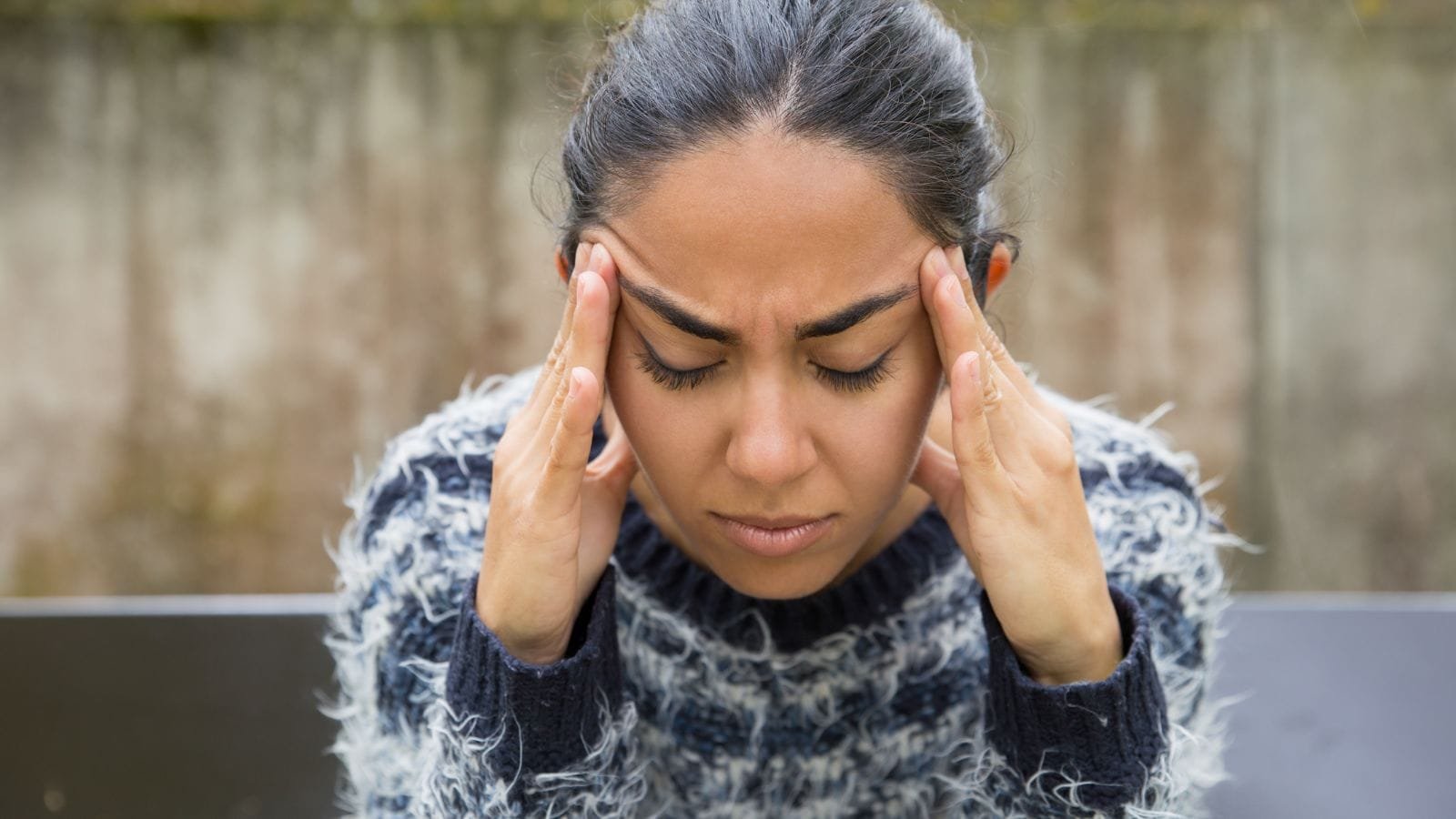
It matters, because the evidence is different for each. Migraine is common. The NHS puts it at about 10 million people in the UK. It is more than a headache. It usually throbs, is often on one side, and is moderate to severe. Moving about makes it worse. Most people feel sick, or find light and noise hard to bear. An attack lasts anywhere from 4 hours to 3 days. Some people get warning signs first, such as zigzag lines or flashing lights. Migraine often starts in the teens and often runs in families.
A tension-type headache is plainer. It feels like pressure or a tight band rather than throbbing, it’s usually on both sides, and it’s mild to moderate. You don’t feel sick with it. Many people get both kinds at different times. If you’re not sure which you have, a headache diary for a few weeks helps, and so does a chat with your GP. Acupuncture can give short-term relief from tension-type headaches too, and NICE recommends the same course of up to 10 sessions for people who get them often.
What a session involves
Acupuncture for migraine is primarily a preventive treatment. I treat between attacks, not during one, and the aim is fewer attacks over the months that follow. There is some evidence for treating during an attack, but it’s thin, and a course between attacks is what NICE and the main trials are about.
At the first visit I ask about your headaches. What they feel like, how often they come, what you’ve tried. I don’t need much in advance. If you keep a headache diary, bring it. NICE suggests keeping one for at least eight weeks, and it’s the best way to tell whether a treatment is working. I’ll also ask how often you take painkillers. Taking them on too many days a month causes a headache of its own, and that needs sorting first.
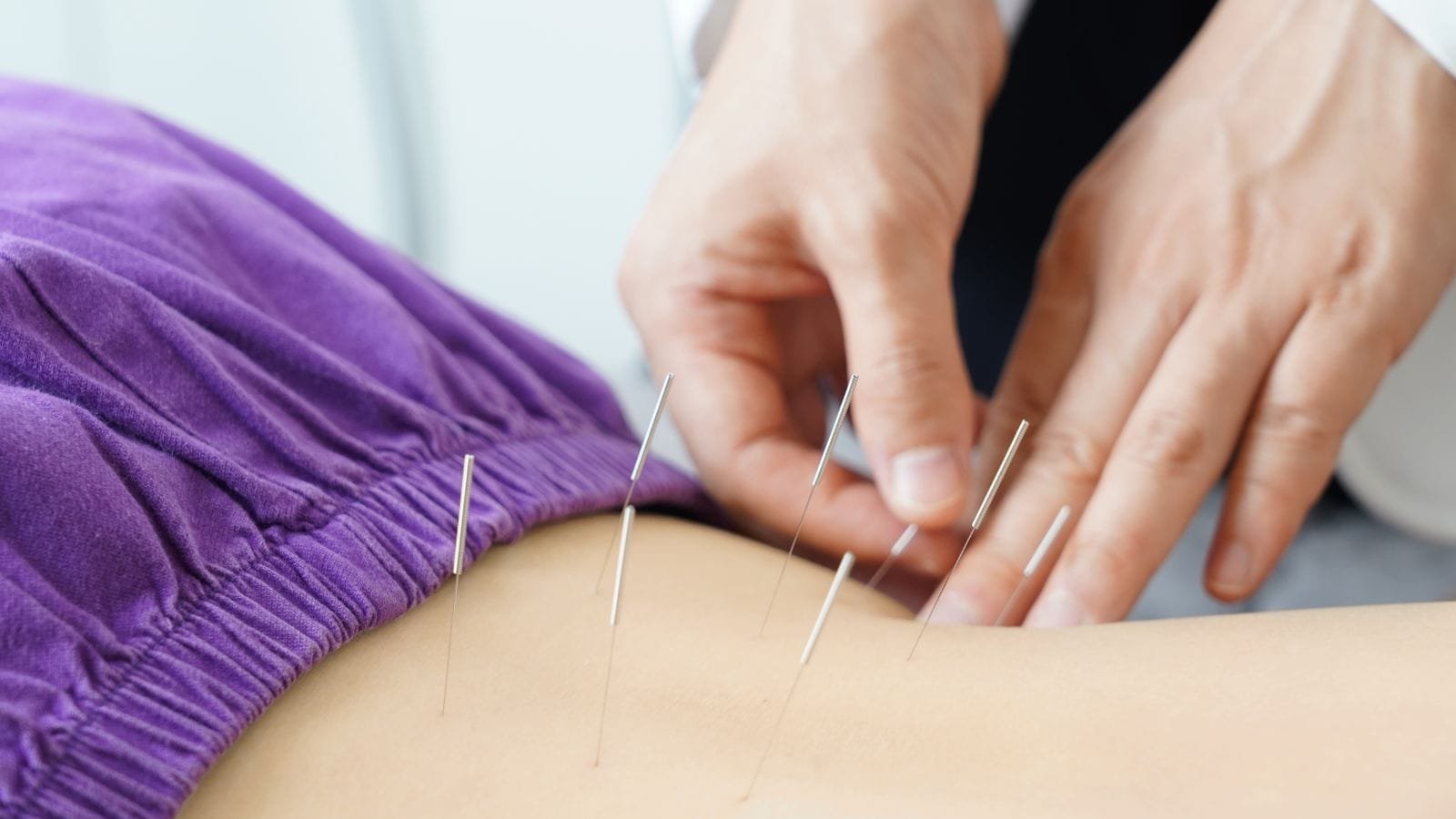
People with migraine can be sensitive to needling, so I start gently and build up over the first few sessions. A full session typically includes about 14 to 16 needles. They go in the lower legs and feet, the forearms and hands, and around the head, neck and the base of the skull. They stay in for 20 to 30 minutes. There’s a brief sensation as each needle goes in. Sometimes it’s sharp, more often a dull ache, and once they’re in you usually feel nothing, other than, often, a deep sense of relaxation. I rarely use electroacupuncture for migraine.
Side effects
In the trials, about 1 in 6 people had a side effect, the same as in the sham groups. These were minor: a small bruise, a sore spot, or feeling faint for a few minutes. Two UK surveys covering about 66,000 treatments found no serious events. They did find that a few people, around 1 to 3 in 100, felt worse for a short time after a session. It usually settles, and most of those people then improved.
How many sessions
Some people notice a change after the first session. More often the benefit builds over a course of weekly sessions. For migraine I suggest eight to ten before judging it, because the trials show the effect can take a couple of months to appear. Eight to ten sessions is a real cost, so check the prices on my medical acupuncture page before you start.
For comparison, NICE’s course is up to 10 sessions over five to eight weeks. The trials used anything from six to 20. Cochrane found that trials with 16 or more sessions did better against sham than trials with 12 or fewer, and that the benefit lasted about six months after a course ended. In the BMJ trial, the gap over sham only showed clearly from week 13.
My view
Of all the things I treat, migraine is where I’m most comfortable recommending acupuncture, because the evidence is better. Many of the people I see have tried preventive tablets and either had side effects or no significant improvement. Many of them appear to do very well. The trials show a clear benefit over doing nothing and a modest edge over sham, but I can’t tell in advance who will benefit. I think it’s definitely worth a try, if you have tried lots of preventative treatments and continue to suffer.
When to see your GP
Acupuncture doesn’t replace a diagnosis. See your GP if your migraine attacks are severe, getting worse or lasting longer than usual; if you have attacks more than once a week; if you’re finding them hard to control; or if you regularly get them before or during your period.
Call 999 if a headache comes on suddenly and is extremely painful, or comes with any of these:
- Problems speaking or remembering things.
- Loss of vision, or blurred or double vision.
- Feeling drowsy or confused, or a seizure.
- A very high temperature with symptoms of meningitis.
- Weakness in an arm or leg, or on one side of the face.
- A recent head injury.
These lists are from the NHS migraine page. The NHS also advises not taking painkillers for migraine on more than two days a week, because that can contribute to other types of headache.
Summing up
Acupuncture can give some people short-term relief from migraine. It did better than usual care in the trials, held its own against the preventive tablets with fewer side effects, and it’s one of the few treatments NICE names as an option. After eight to ten sessions you’ll know whether it’s working for you.
If you’d like to see how the evidence compares for other medical conditions, check out my blog page or start with Acupuncture for back pain: does it help?. You can read more about treatment and prices on my medical acupuncture page.
Sources
- NICE guideline CG150, Headaches in over 12s: diagnosis and management (2012, last updated June 2025). Recommendations 1.3.9 and 1.3.21 cover acupuncture.
- SIGN 155, Pharmacological management of migraine (Scotland; revised May 2026). Covers medicines only.
- NHS: Migraine (reviewed March 2026). Symptoms, treatment and when to get help.
- The Migraine Trust: Acupuncture for migraine (reviewed February 2025).
- Cochrane review: Acupuncture for the prevention of episodic migraine (Linde and others, 2016). 22 trials, 4,985 people.
- Acupuncture versus standard medical care in the prophylactic treatment of migraine (Pistoia and others, European Journal of Neurology, 2025). 15 trials.
- GERAC migraine trial (Diener and others, Lancet Neurology, 2006). 960 people; acupuncture, sham and drugs.
- Manual acupuncture versus sham acupuncture and usual care for episodic migraine (Xu and others, BMJ, 2020). 150 people; blunt-needle sham.
- Inconsistent placebo effects in NICE’s network analysis (White and Cummings, Acupuncture in Medicine, 2012).
- Adverse events following acupuncture: prospective survey of 32,000 consultations (White and others, BMJ, 2001) and The York acupuncture safety study: 34,000 treatments (MacPherson and others, BMJ, 2001).
Try medical acupuncture
Start with one session and see how you get on. At Private Medical Rooms, 679 Clarkston Road.